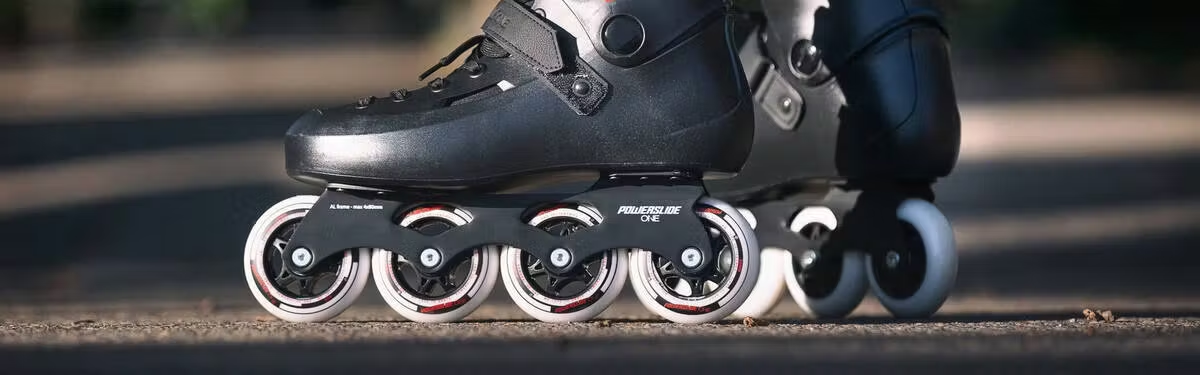
- Wheel size: Influences both speed and the ease of manoeuvring.
- Durometer: The hardness of the wheel – impacts speed and the ability to absorb vibrations.
- Rebound: The speed at which the wheel returns to its original form after being compressed.
- Grip: Refers to how effectively the wheel grips surfaces.
- Wheel profile: Alters speed and stability.
Overview

Overview
Which Inline Skate Wheels Should You Opt For?
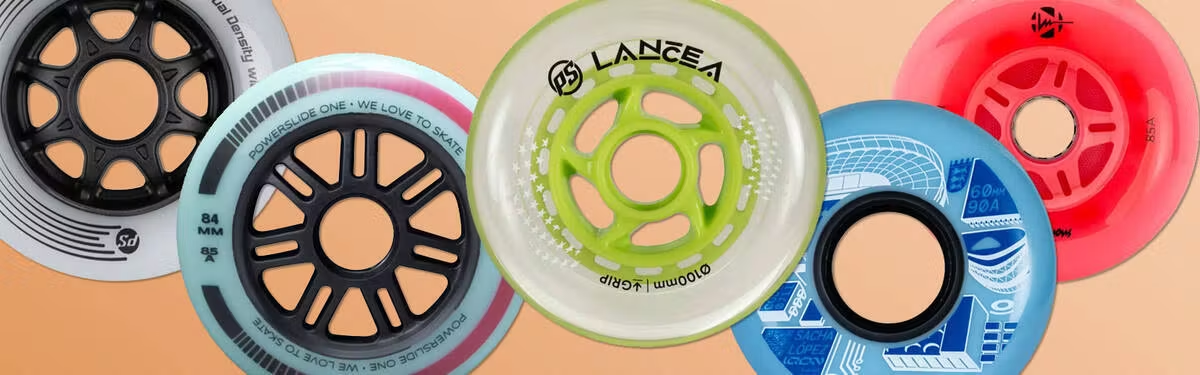
Your choice of inline skate wheels becomes simpler when you know which style of wheel complements your particular skating style.
Regardless of your inline skating style, it is crucial to focus on the wheels' size and firmness, aligning them with the surfaces over which you plan to skate.
| Inline Skating Style | Properties | Size Range / Hardness Range |
| Fitness Skate Wheels |
Smooth rolling Powerful power transfer
|
80-110 mm 80A-88A |
| Freeskate Wheels |
Fast and agile |
75-110 mm 84A-88A |
| Aggressive Skate Wheels |
Shock-absorbing and stable Smaller in size Round or flat profiles |
55-80 mm 88A-95A |
| Roller Hockey Wheels |
Grippy and agile Excellent acceleration Some specifically for indoor use |
65-84 mm 72-84A
|
| Speed Skate Wheels |
Top speed Usable indoors, on rinks, outdoors, or on roads |
100 mm-125 mm 83A-90A |
Inline Skate Wheels Compatibility
Most inline skate wheels have a uniform width of 24 mm, which simplifies finding suitable wheels for your skates. Any wheel with a diameter that does not exceed the maximum specified for your rollerblade frames can be attached to them.
Comprehending attributes like hardness, rebound, grip, and profile enables you to select wheels that not only fit but optimise the performance of your inline skates.
Stay informed by reading further, or you can directly explore our collection:
Wheel Size - Determining Inline Skate Wheel Diameter
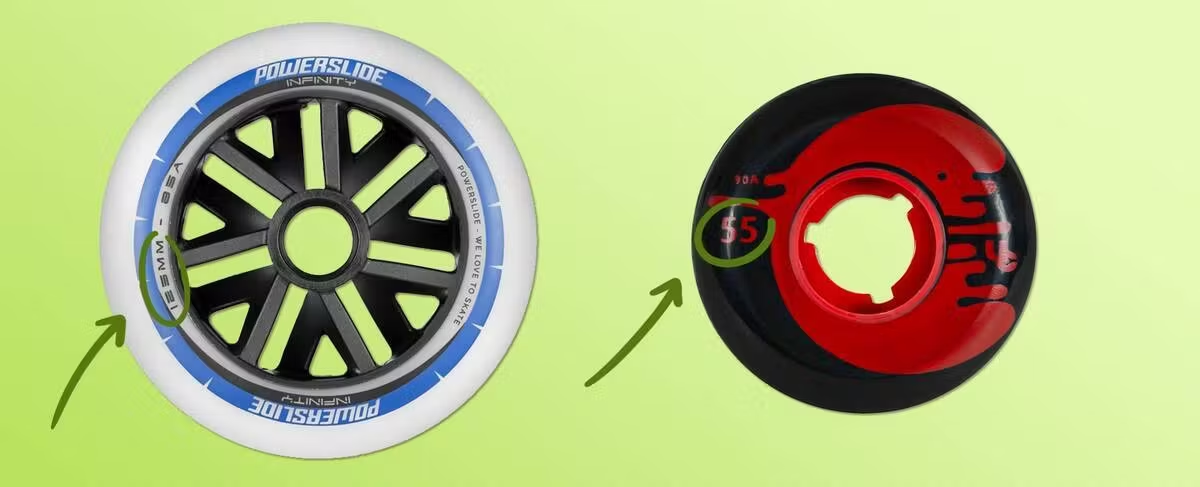
Measured in millimetres (mm), the diameter of an inline skate wheel is typically listed on the wheel's side. If uncertain, you can manually measure the diameter.
The diameter plays a crucial role in wheel behaviour. It directly affects elements such as speed, acceleration, directional stability, and ease of control.
The impact of wheel diameter on inline skate performance:
- Smaller diameter: Quicker acceleration and enhanced control.
- Larger diameter: Greater speeds and improved directional stability.
For each style of skating, different wheel diameters are recommended. Our chart offers general guidance for each style of inline skating:
Inline Skate Wheels Size Chart
| Inline Skating Style | Size Range |
| Aggressive Skate Wheels | 55-80 mm |
| Roller Hockey Wheels | 65-84 mm |
| Fitness Skate Wheels | 80-110 mm |
| Freeskate Wheels | 75-110 mm |
| Speed Skate Wheels | 100-125 mm |
Wheel Hardness - Durometer of Inline Skate Wheels
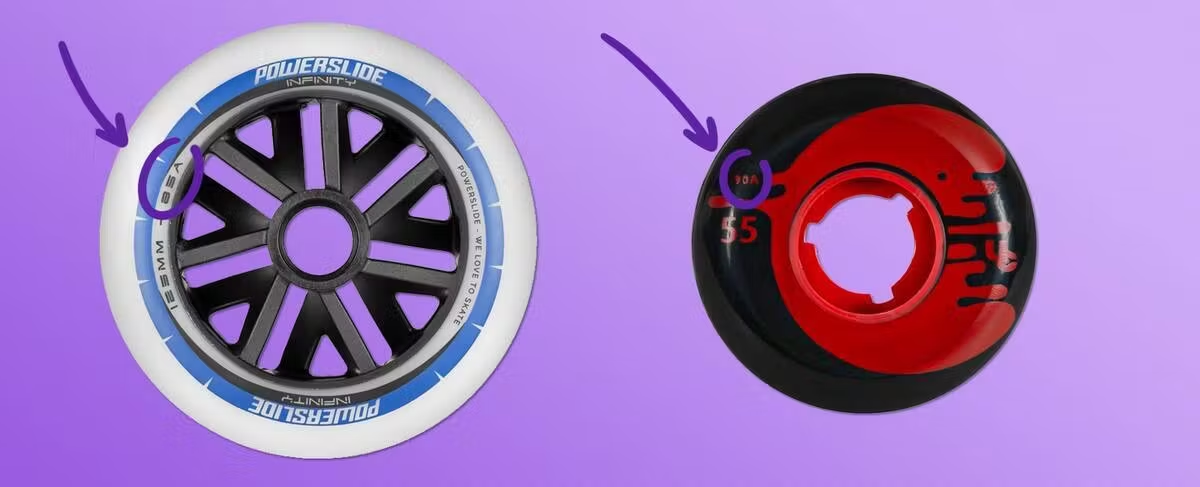
Measured on the durometer scale, rollerblade wheel hardness is a standardised approach to gauge the firmness of materials like rubber and plastics. Wheel durometer is typically denoted by a number followed by an A (such as 82A), with higher numbers signifying harder wheels.
The durometer scale allows one to quickly discern the relative hardness of different wheels, and the rating is often printed on the wheel's side.
Choosing the correct wheel hardness depends on your skating style. See our chart for general guidance on selecting the right wheel hardness:
Inline Skate Wheels Hardness Chart
| Inline Skating Style | Hardness Range |
| Aggressive Skate Wheels | 88A-95A |
| Roller Hockey Wheels | 72A-84A |
| Fitness Skate Wheels | 80A-88A |
| Freeskate Wheels | 84A-88A |
| Speed Skate Wheels | 83A-90A |
Wheel hardness is vital in how a wheel performs across different surfaces and settings. Always account for the wheel hardness if you aim for optimised performance.
Hard vs. Soft Inline Skate Wheels
Grasping wheel hardness and its influence on wheel performance is essential – especially when comparing two wheels of varying hardness.
The implications of wheel hardness impact your rollerblades in the following ways:
Advantages of harder wheels- Achieve higher speeds
- Offer longer durability
- Reduced grip
- Poor vibration absorption
- Enhanced grip
- Superior shock absorption
- Less speed
- Less durable
Typically, softer wheels will provide superior shock absorption and better grip, whereas harder wheels will have less of both.
Alternative Hardness Measures
The footprint scale is utilised by certain brands to indicate the hardness of rollerblade wheels. It converts as follows to the A-scale:
- F0 - equates to approximately 88A
- F1 - equates to approximately 85A
- F2 - equates to approximately 84A
- F3 - equates to approximately 83A
The Rebound Characteristics of Inline Skate Wheels
Rebound refers to the speed with which a wheel regains its shape post-compression. When skating, each stride compresses the wheels, and higher rebound means quicker recovery to facilitate speed. Conversely, low rebound dissipates energy into the surface, slowing you down. As a result, rebound qualities greatly affect speed.
Wheels known for high rebound are typically of higher quality. Manufacturers often denote such wheels as SHR urethane, or Super High Rebound. There's no universal metric for comparing wheel rebound, but generally, more affordable wheels offer less rebound, while pricier, reputable brands tend to yield higher rebound.
Understanding the Grip of Inline Skate Wheels
The grip of inline skate wheels is influenced by the polyurethane (PU) formula in their rubber composition. Wheel hardness is pivotal in this context.
The relationship between hardness and grip is outlined below:
- Softer wheels: Higher grip.
- Harder wheels: Lower grip.
The surface being skated on plays a crucial role in determining a wheel's grip effectiveness. Slippery environments such as rinks or indoor skateparks demand more grip to avoid slipping, while rough surfaces like asphalt require less grip concern.
Thus, rougher terrain may allow for the use of harder wheels without compromising traction.
Inline Skate Wheels' Profile
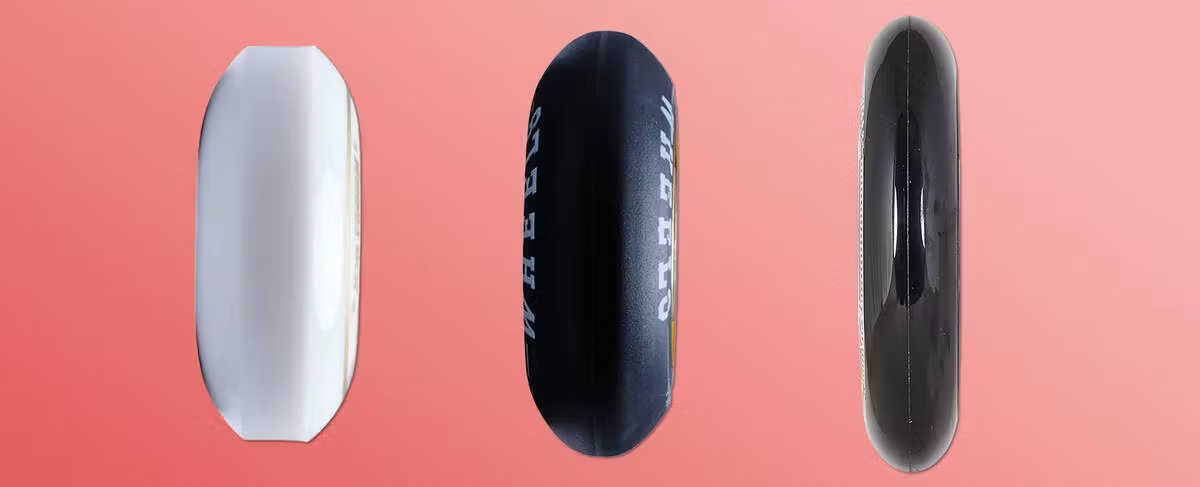
Inline skate wheels come in various profiles, from flat to pointed. The profile impacts the contact area between the wheel and the ground. A flat profile maximizes the contact area, while a pointed wheel has a smaller zone of contact.
Profiles featuring a pointed structure can be seen across many skating styles, ranging from fitness to high-performance speed skating. Pointed wheels minimize friction and roll, making them efficient for speed, explaining their prevalent use in the inline skating market.
Flat wheels are specifically utilised in aggressive skating. Although slower, they ensure stability, suitable for trick landings.
Wheels with a rounded profile are prevalent in freeskating and aggressive skating. Rounded profiles in aggressive skating shun wheel bites on flat setups, and they offer more control than pointed options, benefiting beginners with a forgiving nature.
Exploring Hubs of Inline Skate Wheels
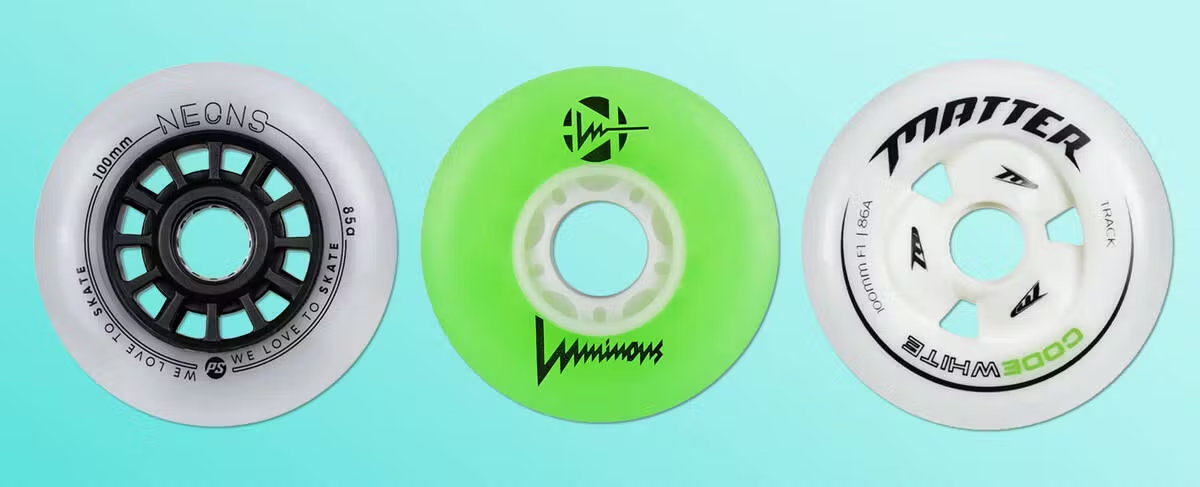
The wheel hub serves as its core, positioned centrally to hold the bearings in place. It's commonly made from durable plastic or aluminium. While aluminium hubs are often heavier, they offer durability against impacts.
Main hub types include:
- Solid core: Sturdier but heavier.
- Spoked core: Lighter but lacks some durability.
- Hollow core: A balance between reduced weight and robustness.
To maximise performance, inline skate wheels should maintain strength and robustness while being as lightweight as possible, aiding efficiency and reducing fatigue.
Maintenance of Inline Skate Wheels
Ensuring your wheels' longevity can help in resource-saving, given that wheels usually wear out more quickly than other skate components. Implementing a systematic wheel rotation schedule can help extend their lifespan and improve your skates' efficiency.
Inline skate wheels wear naturally in a manner that the wheel centre drifts toward the skate's outer side, creating an unpreferred flat diagonal on the wheel's inside. At this point, consider rotating the wheels.
Rotating your rollerblade wheels consistently helps maintain their shape. We suggest consulting our wheel-flipping guide if uncertain about the process:
If you are uncertain about whether it is the right moment to acquire new wheels for your inline skates, have a look at our comprehensive guide on this matter:
Should you require assistance with fitting your wheels, we have the answer here:
For guidance on the general upkeep of inline skates, refer to our online guide brimming with valuable tips right here:
... And What of Bearings?
We provide distinct guides focused on wheel bearings. This particular guide includes all the information about their function:
If your glide isn't as seamless as before, the cause might be bearings that are no longer in peak condition. In this situation, try giving them a meticulous cleaning followed by proper lubrication: