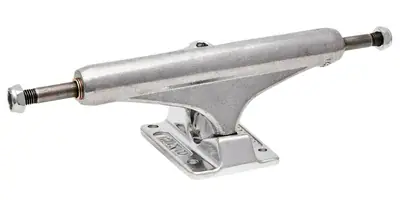
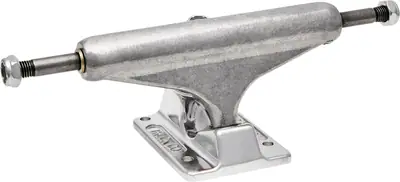
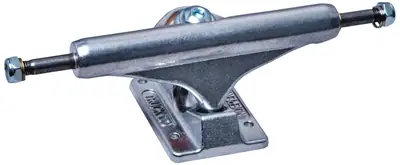
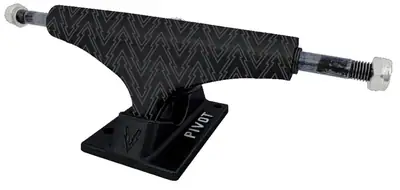
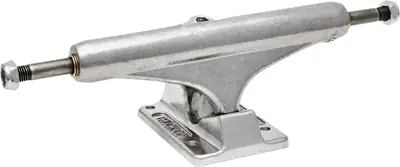
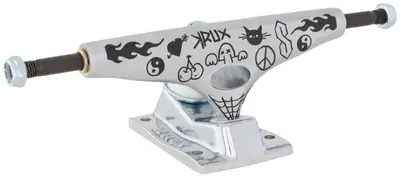
Skateboard bushings, often referred to as truck rubber or cushioning, are crucial for your skateboard’s performance. The hardness and shape of these bushings significantly impact your board’s turning, responsiveness, and feel underfoot.
- Bushings with higher hardness provide enhanced stability and potentially a more responsive snap.
- With softer bushings, you can turn and manoeuvre the skateboard more effortlessly.
Overview

Understanding Skateboard Bushings
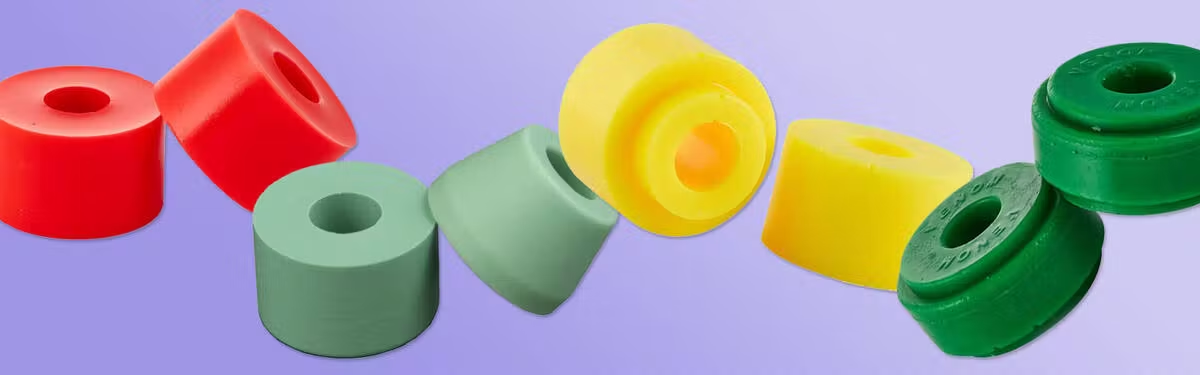
Skateboard bushings are the urethane rubber components, shaped either cylindrically or conically, located on the kingpin of the trucks. They are essential for steering and controlling the skateboard, significantly influencing its overall performance characteristics.
Each skateboard truck utilises two bushings:
- Top bushing – positioned facing the ground.
- Bottom bushing – oriented towards the deck.
When weight is applied to either side of the deck, the bushings follow these movements, allowing the trucks to pivot and consequently change your direction of travel. The sharpness of your turns hinges on the degree of this pivoting, which is affected by how readily the bushings yield to your weight shifts.
→ The firmness or hardness of your bushings defines the equilibrium between agility, responsiveness, and stability.
Impact of Bushing Hardness on Your Skateboard
- Softer bushings result in looser trucks that are simpler to turn.
- Harder bushings offer greater resistance, leading to tighter, more stable trucks.
Signs You May Need Harder Bushings
... when your board feels excessively loose:
If you encounter speed wobbles or feel that your trucks lack sufficient tightness, harder bushings can offer the stability you require.
... when experiencing wheelbite:
Using harder bushings may lower the chance of wheelbites. It’s advisable to check your truck tension first and contemplate using risers if needed.
... when the kingpin nut is fully tightened:
Visible threading on the kingpin exiting the nut, or deformed bushings from washer pressure, indicates a need for harder bushings. Hint: If you have the correct-sized washers available, try positioning them underneath the truck bushing washer to cover exposed threading.
Signs You May Need Softer Bushings
... when steering and starting turns is challenging:
Softer bushings can make turning less demanding.
... when you prefer carving and cruising:
They simplify sharper turns and enhance carving ability.
... when a loose, fluid feel suits your style:
If you desire a board that turns readily and reacts to subtle movements, softer bushings offer that smooth, responsive control.
Many favour looser trucks, and some even remove the top bushings for extreme (yet rattly) flexibility (it’s not recommended).
The Relationship Between Bushing Hardness and Body Weight
Your body weight influences how bushings respond: heavier individuals can exert more pressure with less effort, while lighter individuals may need softer bushings for similar responsiveness.
We’ve assembled a table offering bushing hardness suggestions based on user weight. Remember, body weight is only one factor and does not depict personal preferences. This chart is merely a starting point for those exploring varying bushing stiffness levels.
→ For the best guide, consider your current bushings. Knowing their durometer rating allows you to shift up for more hardness or down for a softer experience.
| User Weight (kg) | Rider Weight (lbs) | Softer / Looser Setup (Durometer) | Stiffer / Tighter Setup (Durometer) |
| <65 kg | <143 lbs | 81A - 85A | 86A - 90A |
| 65 - 80 kg | 143 - 176 lbs | 86A - 90A | 91A - 95A |
| 80 - 90 kg | 176 - 198 lbs | 91A - 95A | 96A - 100A |
| >90 kg | >198 lbs | 96A - 100A | 100A |
Children’s complete skateboards are equipped with bushings optimally set for a child’s weight and movement. When you buy new trucks, the bushings are tailored for most skaters; broader trucks generally use slightly harder bushings than their narrower counterparts.
→ Focus on the skateboard and truck width when selecting a new complete skateboard or new trucks with pre-installed bushings, as they are likely to suit your needs.
Shape of Bushings and Their Performance Impact
The shape of bushings affects how a truck functions.
- Conical (cone-shaped): typically the top bushing, providing a responsive feel.
- Barrel-shaped (straight): often the bottom bushing, ensuring stability.
Using a combination of cone and barrel-shaped bushings as mentioned creates balance. A top cone with a bottom barrel offers stability; double barrels increase stability, while reversing the setup enhances responsiveness.
Fine-Tuning Truck Tightness with the Kingpin Nut
- Tighten the kingpin nut (clockwise) for firmer, less agile trucks.
- Loosen the nut (anticlockwise) to ease turning.
If initialising turns proves difficult and you need to lift the front wheels to steer, try loosening the trucks. If the trucks are too slack and you struggle for control, tighten them slightly.
Identifying When to Replace Bushings
Examine bushings for cracks, splits, or a sticky feel, as these signs indicate wear and decrease in functionality. Replace old bushings instead of over-tightening your trucks as a temporary fix.
If the bushings are in good condition and you enjoy the skateboard’s response, replacement isn't necessary. Nevertheless, the aforementioned signs of wear mean replacements will eventually be needed. For new bushings, find what you're looking for here: