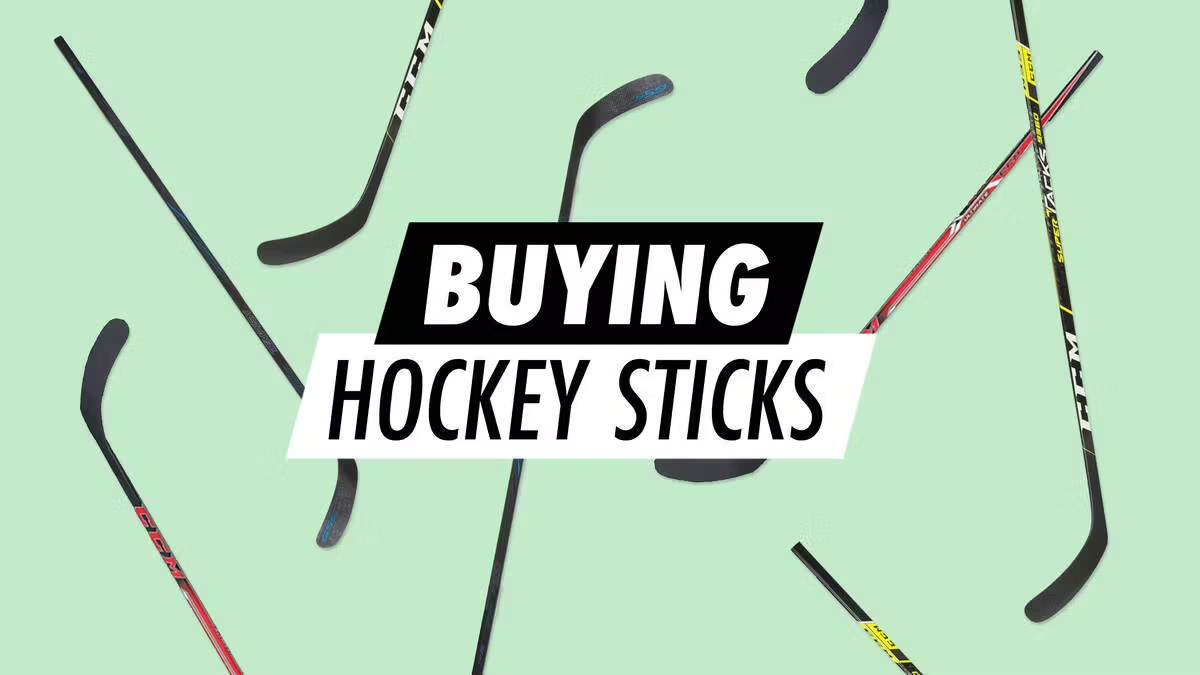
Selecting a hockey stick requires aligning it with your skill level, height, and playing technique. Consider the size, flex, and surface on which you'll be playing.
With numerous options to choose from, identifying the right hockey stick tailored to your needs can initially seem challenging. Whether engaged in roller hockey or ice hockey, having the appropriate stick is vital for your success. Below are essential factors to assist you in choosing the ideal hockey stick suited to your playing style, expertise, and environment.
- Surface Type: Determine the stick based on your playing surface—ice, roller, or street.
- Material: Opt for a stick crafted from a robust yet lightweight material.
- Length: Gauge the stick length based on your height and playing approach.
- Flex: Select flex according to your strength and preferred shot method.
- Handedness: Decide on left or right based on your grip style.
For comprehensive details on these factors, continue reading!
Overview

Varieties of Hockey Sticks: Ice, Roller, and Street
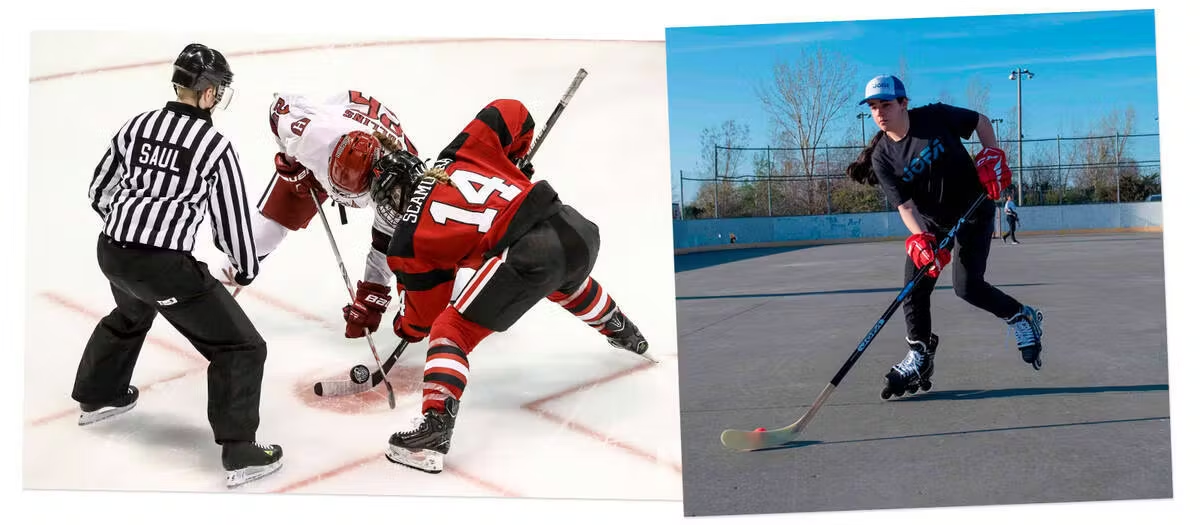
The initial decision involves whether the stick is intended for ice hockey, roller hockey, or street hockey. The choice heavily depends on the playing surface and your personal style.
- Ice hockey sticks: Crafted for ice environments
- Roller hockey sticks: Designed for smooth asphalt or sports court tiles typical in roller hockey.
- Street hockey sticks: Engineered for harsh outdoor surfaces like asphalt; these sticks are generally made from durable materials to endure wear.
- Multi-purpose sticks: Many sticks are suitable for diverse settings, allowing players who split time between street and indoor hockey to invest in a single stick.
When reviewing a product description, verify if the stick is specifically designed for a certain type of hockey or surface.
Could Ice Hockey Sticks Be Used for Roller Hockey?
It is advisable not to use an ice hockey-specific stick for roller hockey, as rougher surfaces will quickly wear the blade down. It is recommended to use sticks for their intended purpose as per the manufacturer, ensuring durability.
Materials That Make Up Hockey Sticks
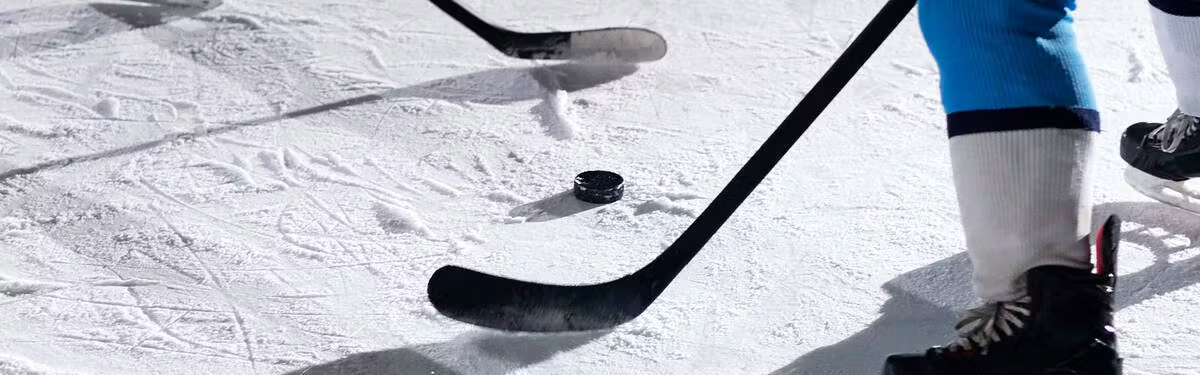
Materials like carbon fibre, fibreglass, Kevlar, and wood are utilised to make hockey sticks, with wood being the original material. Nowadays, it's quite common to find sticks composed of a mix of fibreglass and carbon fibre.
The blade material differs from that of the shaft, as the shaft needs to be both strong and lightweight, whereas the blade must endure hard impacts from pucks and balls.
Hockey stick shafts require a high strength-to-weight ratio and must be sufficiently flexible to withstand bending during competitive play. Specifically optimised composite materials, as well as certain hardwoods, commonly exhibit these properties.
Blades must withstand strong impacts without adding excessive weight, ensuring the player maintains control while shooting. Materials like carbon fibre, fibreglass, wood, or plastic are used to balance control and power in gameplay.
Composite vs. Wooden Hockey Sticks
- Wooden sticks: Sturdy and traditional, wood sticks are often heavier but provide a classic feel, suitable for both street and roller hockey due to their robustness.
- Composite sticks: Made from carbon fibre, Kevlar, or fibreglass, composite sticks are lighter and more flexible, ideal for ice hockey but also excellent for roller hockey for high performance. Composite sticks, typically pricier, offer superior control and shot energy transfer.
While browsing our range of roller hockey and ice hockey sticks, you can categorise these by shaft and blade materials.
Determining the Right Length for Your Hockey Stick

Securing the correct hockey stick length is fundamental for optimal control and shot strength. Consider factors like height, skill sets, playing style, and personal taste when choosing stick length.
Short vs. Long Hockey Stick
Shorter sticks offer better control and mobility, whereas longer sticks enable a broader reach. Offensive players often choose shorter sticks, while defensive players prefer longer sticks.
Measuring the Proper Hockey Stick Length
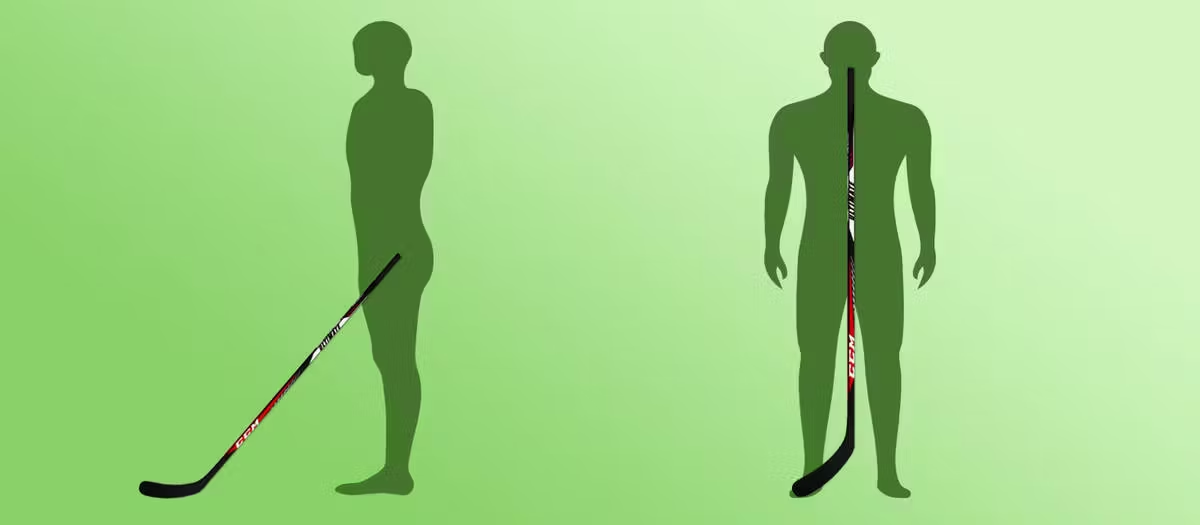
To check for the correct stick length, extend your arm along your side and grasp the stick end while wearing your skates. Slightly bend your arm, ensuring it stays close to your body. The stick length is right if the blade's toe points slightly upwards.
Alternatively, check using these methods while standing with or without skates:
- While wearing skates: The top of the stick should not surpass your chin.
- If not wearing skates: The top of the stick should not reach above the tip of your nose.
Players often opt for slightly longer sticks to customise them later by cutting, but be aware that this invalidates any warranties.
Explore our rollers and ice hockey stick collections by length to easily find sticks available at your preferred measurements. Consider consulting our hockey stick sizing guide for further guidance.
- Explore our hockey stick sizing guide
- Check out our collection of ice hockey sticks
- Check out our collection of roller hockey sticks
Understanding Hockey Stick Flex
Flex determines how much a stick bends under pressure, such as when shooting. A higher flex number indicates a stiffer stick. Your choice should depend on your strength and preferred shot type.
- Lower flex: Facilitates more delicate and accurate shots, recommended for less experienced or younger players due to ease of use.
- Higher flex: Allows delivering more powerful shots with extra force, suitable for advanced players.
The Role of Hockey Stick Blade Curve
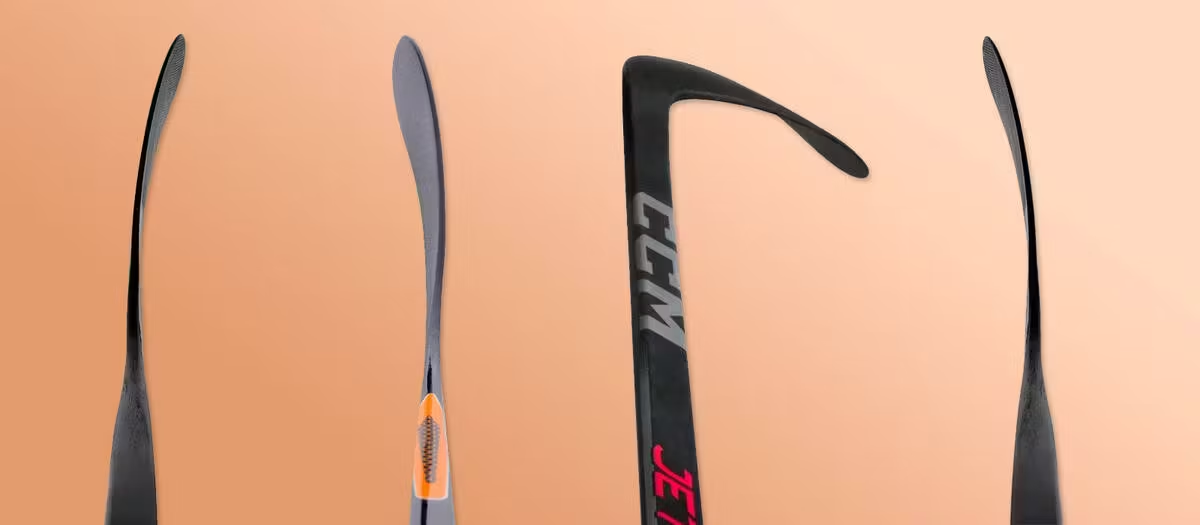
The blade curve is crucial, as it influences puck or ball handling during shots, passes, and dribbling. It's worth experimenting with various blade curves to discover what complements your playing style best.
By creating a 'pocket' for the puck or ball, the blade curve enhances control and results in more consistent and powerful shots.
Selecting between Left-Handed and Right-Handed Hockey Sticks
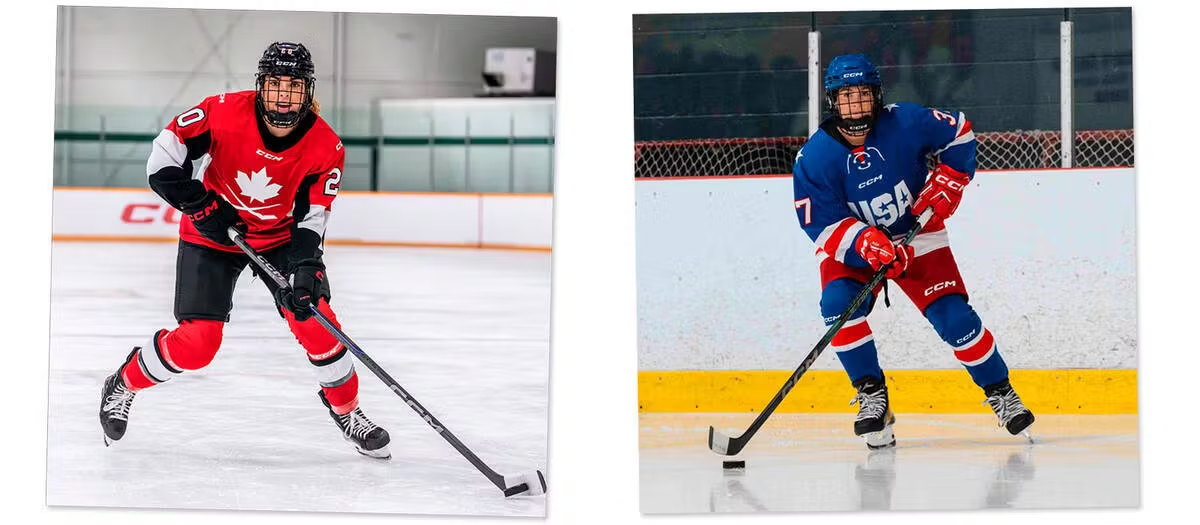
The hand you use to control the stick determines whether you should have a left-handed or right-handed stick. If your right hand is on top, you need a left-handed stick, and vice versa. Which side you shoot from isn't about being left or right-handed; instead, go with what feels comfortable.
If uncertain, hold the stick as if preparing to strike, and consider these points:
- Left-handed stick: Your right hand is on top while the puck is on your left, with the left hand near the blade.
- Right-handed stick: Your left hand is topmost while the puck is on your right, with the right hand near the blade.
In the video below, Nicklas shows how to determine your handedness when it comes to hockey.
Explore our complete set of roller and ice hockey equipment. We provide all necessary items for hockey enthusiasts: