Winter Sports
 Scooters
 Skates
 Boards
 BMX
BMX Apparel
 Surf
Surf On Sale


It's important to thoughtfully compare different options when picking out a beginner skateboard. The variations between skateboards are more substantial than one might initially think, and through this guide, we hope to clarify the critical questions you might have, whether you're new to the sport or returning after a long break.
Overview

Options for Beginner Skateboards
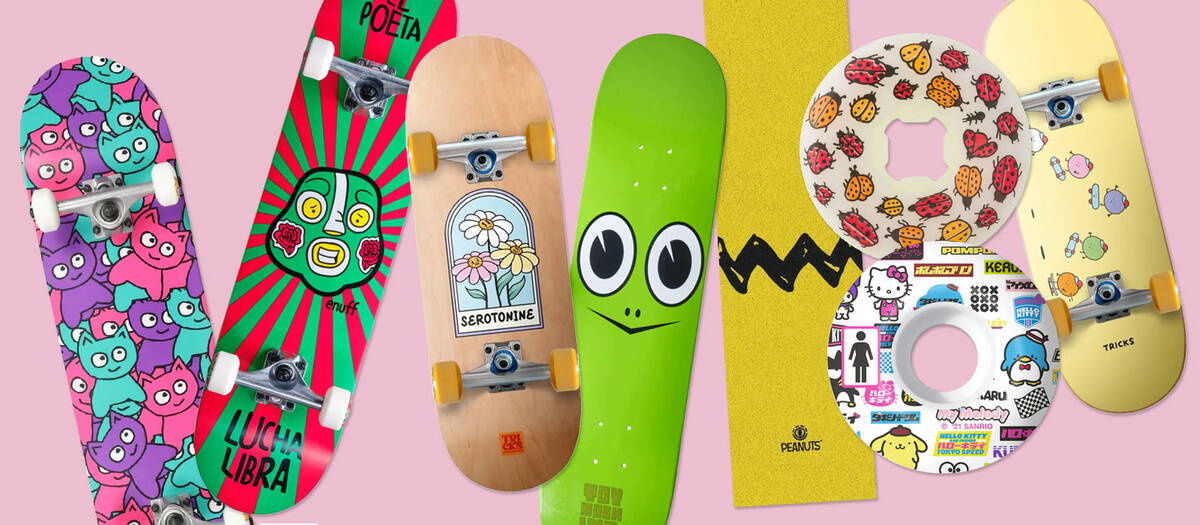
When selecting your initial skateboard, considering the type of skateboarding style you're eager to explore is key. As you improve, you'll gain a better grasp of your skateboarding likings, allowing for more tailored decisions. Initially, it's wise to select a versatile board suitable for learning basic tricks and techniques. There's no need to make highly specific selections at the beginning.
As a rookie, you have three principal skateboard types to contemplate:
- Skateboards: These boards, designed for tricks, are typically used in street and park environments, featuring concave decks with double kick tails and small wheels. They offer a stable foundation for beginners starting out on their skateboarding path.
- Cruiser Skateboards: If your primary goal is cruising or travel, a cruiser board is your go-to option. With wider decks and soft wheels, cruisers deliver superior comfort and maneuverability, providing a smooth journey across uneven ground. If cruisers are your interest, check out our Guide to Buying Cruiser Skateboards or explore our range of quality Cruiser Skateboards.
- Longboards: Longboards are a great pick for newcomers wanting steadiness and smooth riding. Ideal for commuting or downhill adventures, longboards ensure a relaxed and steady skateboarding introduction. Styles like longboard dancing, freestyle, or downhill offer much variety. Should you want to venture into longboarding, view our Guide to Buying Longboards, or browse our assortment of Longboards.
This manual emphasises classic skateboards best suited for beginner tricks.
Top Skateboards for Young Starters
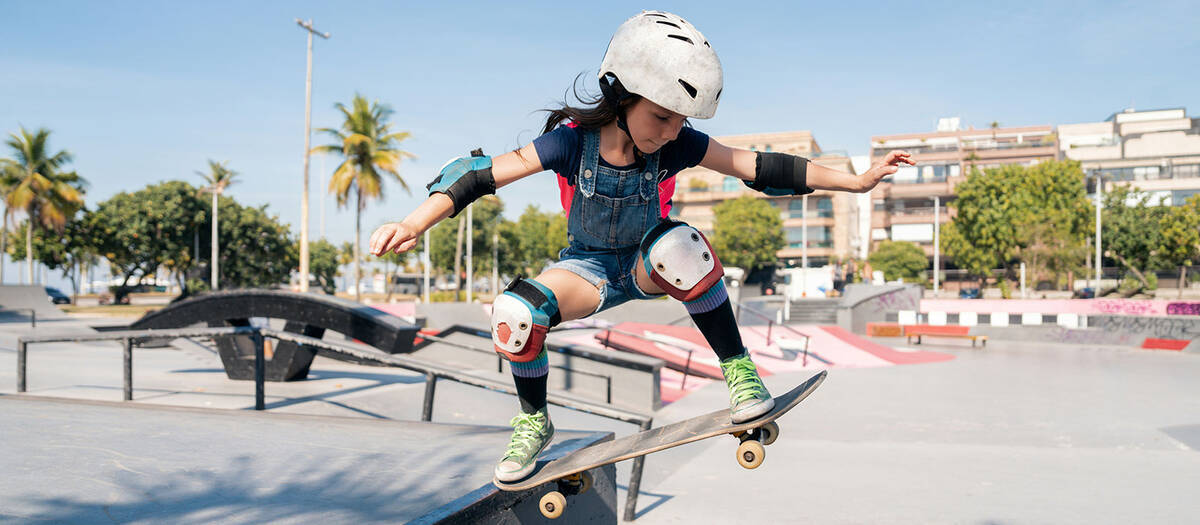
Inquiries regarding beginner skateboards for girls or versatile boards for boys are common – rest assured, there are plenty of designs to suit the aesthetic preferences of the rider.
An affordable option will do fine during the initial learning phase, but think about whether your chosen board should support ongoing development as a skater.
As skaters advance to tricks like popping ollies, having a firm and responsive deck is beneficial for maximising performance. When you’re picking a board at this stage, consider a slightly pricier complete skateboard, although it's not a requirement.
These specifications are essential when selecting a child's complete skateboard:
- Deck width: Opt for a deck width similar to the child's shoe length. A board that is too wide may hinder steering, while one that is too narrow could impact stability. For more information, see our Skateboard Size Guide or dive deeper into this guide below.
- Wheel hardness: A max hardness of 92A is suggested for beginners. Softer wheels lessen the likelihood of sudden stops when hitting small stones or pavement cracks, reducing the likelihood of falls that could deter a beginner.
- Bushings: Choose bushings below 90A hardness for kids under 65 kg. The hardness influences the pressure needed to steer in a given direction. Softer bushings (lower durometer rating) ease steering, whereas harder bushings (higher rating) make it more challenging.
When examining our Complete Skateboards, filter by wheel hardness and deck size to focus only on boards that align with your criteria.
Choosing Beginner Boards for Adults

A proper complete beginner skateboard empowers adults to start skateboarding with certainty, no matter their age or past experience. Whether starting anew or returning after a pause, you can find a pre-assembled board that fits your requirements, but choose wisely, considering that adults generally weigh more than teenagers.
To find the suitable complete skateboard for an adult beginner, take note of these characteristics:
- Wood type: Go for a 7-ply maple deck. Avoid Chinese maple as it's generally softer due to fast-growing conditions, making it less resilient. Maple from colder regions grows slower, resulting in denser, more pop-filled, and durable boards.
- Adult skateboard size: As an adult beginner, align the deck width with your shoe length. A wider deck accommodates easier steering. While starting, follow our basic recommendations (given below). Your preferences might deviate from these as you improve.
- Wheel hardness: Select wheels no harder than 97A. Hard wheels transmit more surface vibrations. Softer wheels are less reactive and lively. Advanced skaters lean toward wheels rated over 97A, but softer ones are suitable for starters.
- Bushings: Truck bushings impact steering capacity. Generally, heavier individuals want harder bushings. For those weighing 65 - 79 kg, select 85A-95A bushings; over 80 kg, choose 91A or harder.
Resuming Skateboarding as an Adult
It's never too late to skateboard! Even after a pause, your prior experience is still valuable. Skateboarding's essentials – a deck, two trucks, and four wheels – remain unchanged.
Jumping back in is easy with the right skateboard. Whether aiming for the skatepark or local streets, select a skateboard that aligns with your objectives.
Those returning often prefer boards tailored for cruising, as aiming for intense shredding can seem unnecessary. Opt for a wider deck with softer wheels. If occasional tricks are in your plans, ensure the deck has kick tails on both ends.
Experienced skaters will know about components, so crafting a custom skateboard can be ideal. Use our Custom Skateboard Builder or skim through our wide array of Skateboard Parts to custom-tailor your board.
Finding the Right Beginner Skateboard Size
Our skateboard size chart will guide you to an appropriate size for your first board. Deck width is the key factor in size, and it's likely your preference will evolve as you choose specific styles. Initially, we advise picking based on shoe size.
For a child's first skateboard, consulting the size chart is also recommended.
| Skateboard Width | Recommended Age | Shoe size US | Shoe size UK | Shoe size EU |
| 6.5" | 3 - 5 | 6C - 11C | 5Y - 10Y | 23 - 28 |
| 6.75" | 3 - 5 | 7C - 11C | 6Y - 10Y | 24 - 28 |
| 6.825" | 4 - 6 | 9C - 12C | 8Y - 11Y | 26 - 30 | tr>
| 7.0" | 5 - 7 | 10C - 1 | 9Y - 12Y | 28 - 32 |
| 7.125" | 6 - 8 | 11C - 2 | 10Y - 1 | 29 - 33 |
| 7.25" | 7 - 9 | 12C - 3 | 11Y - 2 | 30 - 34 |
| 7.375" | 8 - 10 | 13C - 4 | 12Y - 3 | 31 - 35 |
| 7.5" | 9 - 11 | 1 - 6 | 13Y - 5 | 32 - 38 |
| 7.625" | 10 - 12 | 2 - 7 | 1 - 6 | 33 - 39 |
| 7.75" | 12 - 14 | 4 - 9 | 3 - 8 | 35 - 42 |
| 7.875" | 12 - 14 | 4 - 9 | 3 - 8 | 35 - 42 |
| 8" & Up | 14 & Up | 9 & Up | 8 & Up | 42 & Up |
Basic Guidelines for Novice Skateboarders
Grasping skateboarding essentials demands dedication and practice, but the best strategy is straightforward: keep going! Have as much fun as possible, follow your instincts, and you'll soon glide through the skatepark. Here are some practical suggestions to consider:
Safety Gear for New Skateboarders
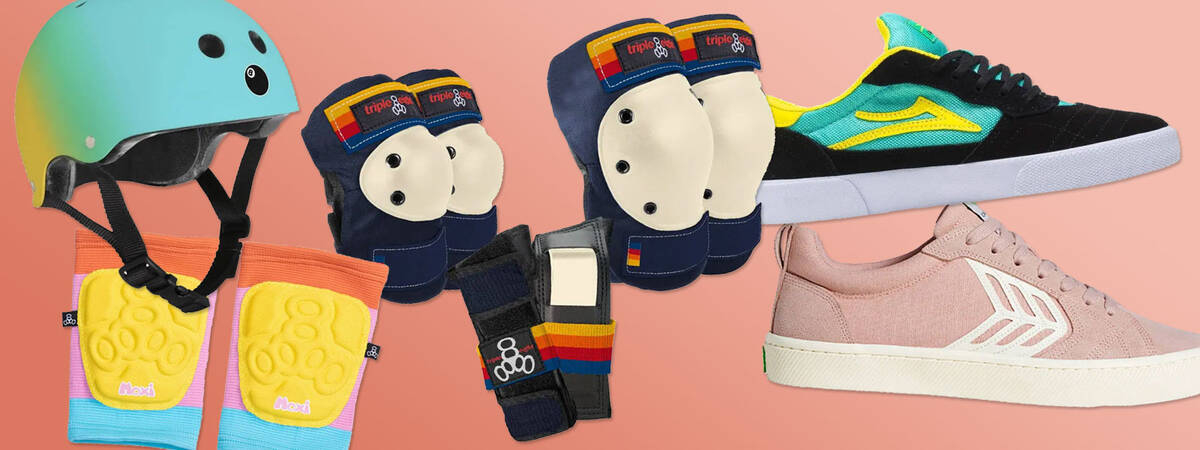
For both beginners and pros, we recommend skateboarding with helmets and pads. The fear of falling can stunt progress, but wearing top-notch wrist, knee, and elbow pads, and a certified helmet reduces this fear and enhances performance. Prioritise safety and ride comfortably with protective gear. Any newcomer should remember this!
Check out our Skateboard Pad Sets and certified Skateboard Helmets.
We also offer top children's helmets and skateboard pads in our Skateboard Protection for Kids collection.
Footwear for Skateboarding
Dedicating funds to well-established skate shoes is smart. Although any sneaker can work for skating, eventually, authentic skate footwear becomes desirable.
What benefits come with choosing genuine skate shoes?
To begin with, they enhance your skating abilities: featuring flat soles and increased grip, they provide excellent traction on your skateboard. The soles are crafted to enhance "board feel," improving your control over the board. This leads to a more responsive and controllable skateboarding experience.
Additionally, skate shoes are built to withstand the rigours of skateboarding. The activity is undeniably tough on footwear. High-quality skate shoes are more durable and will outlast ordinary sneakers through countless skating sessions.
Explore our range of Skate Shoes.
Skateboarding Trousers
When skateboarding, it's essential to have trousers that are both flexible and hard-wearing. As a newcomer, you'll frequently fall, and your trousers will bear the brunt. Moreover, the fabric shouldn't restrict your movements. Stretchy material and/or a relaxed fit is advisable for skate trousers.
If your trousers don't impede your movements and are crafted from durable material, they're suitable for skateboarding. In fact, many well-loved skate trousers are work trousers. Browse our selection to find your new favourite Skate Pants, and don't miss our excellent collection of Skater Belts!
Adjusting Truck Tension
Your skateboard's manoeuvrability can be fine-tuned by altering the tension of the trucks. It ought to respond to your lean direction. If it doesn't, try relaxing the trucks a bit. On the other hand, if it's difficult to keep control because of excessive movement, you should tighten them. Changing the kingpin nut can significantly affect your skateboard's handling!
As each skater carries different weight and height, the pressure they exert on the trucks will differ. Therefore, there's no universal truck tension; experimenting is key to finding the right balance for stable and consistent riding.
Watch this video to learn how to adjust your skateboard trucks, and remember investing in a Skate Tool is cost-effective in the long run.
Skateboard Components – Understanding a Skateboard's Structure
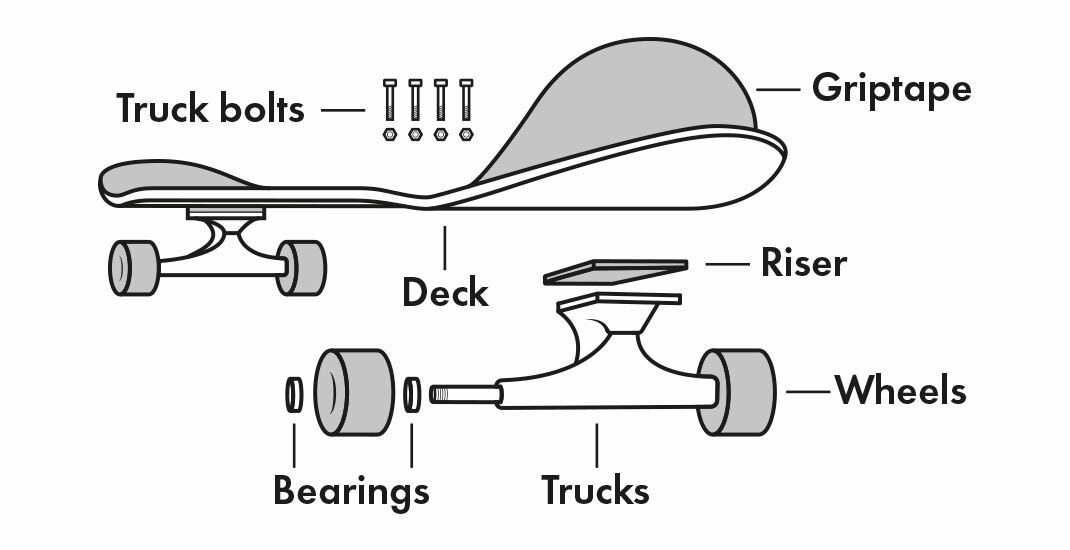
If you're passionate about skateboarding, building your custom board is the optimal choice. Even when obtaining a beginner-level complete, it's beneficial to grasp the basics of skateboard parts - known as the skateboard's anatomy.
There are solid reasons for beginners to choose a custom skateboard. Whether captivated by the artwork on a separate deck or seeking the highest quality trucks, assembling your skateboard allows for precise part selection.
Should you feel daunted by grip tape application or wheel installation, try our Custom Skateboard Builder. Our experts can compose the full board for you, ensuring it's ready to ride straight out of the box.
Let's quickly overview the various skateboard parts:
Skateboard Decks
Decks used on skateboards are generally formed from layers of wood, known as ply, with trick decks typically being made of 7-ply maple. Beginner boards are often crafted from denser maple varieties for added durability. The deck forms a major part of a skateboard, acting as the stage for tricks and movements.
Check out our comprehensive Guide to Buying Skateboard Decks or view our complete range of Skateboard Decks.
Skateboard Trucks
Trucks are located beneath the skateboard deck, comprised of metal T-shaped pieces where the wheels mount. They are pivotal steering components on the complete board, heavily impacting its manoeuvrability and riding qualities.
For more insights about skateboard trucks, including elements such as bushings, hangers, and baseplates, refer to our detailed Skateboard Truck Buying Guide. When you know what you're after, check out our comprehensive selection of Skateboard Trucks.
Skateboard Wheels
Wheels on skateboards are created from polyurethane and are available in a range of sizes, hardness levels, and shapes. They are instrumental in affecting the skateboard's smoothness, velocity, and grip.
As a newcomer, focus on the wheel hardness you select, as it's measured on the durometer scale. Here's our general advice for skateboard wheels for novices:
- Kids should choose wheels with a durometer of 92A or below.
- Adults starting out should go for wheels with a durometer of 97A or less.
For trick learning, beginners are recommended to go for a diameter between 52 - 54 mm.
For detailed insights on skateboard wheels, check out our Guide to Buying Skateboard Wheels. You can also browse our complete selection of Skateboard Wheels, filtering by hardness or other specifics to find the best matches.
Skateboard Bearings
Bearings of a skateboard reside within the wheel cores, aiding in smooth and efficient wheel spins to lessen friction. They have varying ABEC ratings from ABEC 1 to ABEC 9, with higher figures suggesting smoother spins. However, more than ABEC ratings, elements like material quality, lubrication, and upkeep greatly affect bearing performance. Hence, as a beginner, ABEC ratings shouldn't be a major focus.
If you notice wheel inefficiency, refer to our guide on How to Clean and Maintain Bearings.
Explore our full range of Skateboard Bearings, or delve into our in-depth Bearing Guide.
Skateboard Griptape
Griptape on skateboards is the gritty, sandpaper-like material atop the deck surface. It provides grip to control the board and prevents slipping. As you slide your feet on the deck's top, it creates friction, along with the quick popping of the kicktail, aiding in lifting the board in ollies.
Griptape comes in varied colours and designs, including clear ones. Explore our variety of Skateboard Griptape.
If in need of applying griptape, here's a brief video tutorial on the process: